
Your Renault’s check engine light just came on, the diagnostic scanner reads DF005, and now you are wondering what it means and how serious it is. You are not alone. The DF005 fault code is one of the most frequently reported diagnostic trouble codes across the entire Renault range, from the Clio to the Scenic to the Trafic. The good news is that, in most cases, the root cause is well understood, the parts are affordable, and the fix is within reach of both professional mechanics and confident DIY owners.
This guide explains everything you need to know about the DF005 Renault fault code: what it actually means depending on which control unit reports it, the specific symptoms you will notice, a complete list of possible causes, a step-by-step diagnostic process, and proven repair procedures that address the problem for good.
What Is the DF005 Fault Code on Renault?
The DF005 fault code is a Renault-specific manufacturer diagnostic trouble code. The “DF” prefix stands for “Défaut Fabricant” (Manufacturer Fault), which distinguishes it from universal OBD-II “P” codes that apply to all vehicle brands. Renault uses DF codes to provide more granular diagnostic information for their proprietary systems and control units.
In its most common context — when read from the engine ECU (Engine Control Unit) — DF005 corresponds to the generic OBD-II code P0335 and indicates a malfunction in the crankshaft position sensor circuit, also referred to as the engine speed sensor circuit. This is the definition most Renault owners and mechanics encounter when they scan the vehicle with a Renault CLIP diagnostic tool or a compatible OBD-II scanner.
However, there is an important nuance that many guides overlook: DF005 does not always mean the same thing. The exact meaning depends on which electronic control unit reports the code. We will break this down in the next section.
DF005 Across Different Control Units
One of the most common mistakes when diagnosing a DF005 code is assuming it always points to the crankshaft sensor. Renault vehicles contain multiple electronic control units, and each one has its own set of DF codes. The code DF005 can appear from several different modules, each with a completely different meaning:
Engine ECU: Crankshaft position sensor circuit / Engine speed sensor circuit (equivalent to P0335). This is by far the most common interpretation and the primary focus of this guide.
Automatic Gearbox ECU (DP0/AL4): Oil pressure sensor circuit. On Renault vehicles with automatic transmissions, DF005 from the gearbox module indicates a fault with the transmission’s internal oil pressure sensor. This can cause the vehicle to enter limp mode and prevent normal gear changes.
UCH Module (Unité Centrale Habitacle): Card error. The UCH is Renault’s body control module, and DF005 from this unit typically relates to an issue with the key card reader or the vehicle’s smart key recognition system.
Headlight ECU: Computer initialization error. This indicates a communication or startup problem with the headlight control module.
Parking System ECU: Right-hand inner sensor failure. When read from the parking assist module, DF005 points to a faulty inner parking sensor on the right side of the vehicle.
Engine Compartment Connection Unit: Internal electronic fault. This points to an internal hardware failure within the engine compartment junction box.
The takeaway here is critical: always note which ECU the DF005 code is being read from. A professional Renault diagnostic tool like CLIP will clearly show the source module. Generic OBD-II scanners may only show the engine ECU codes, which means you could miss a gearbox-related DF005 entirely.
Symptoms of a DF005 Fault Code
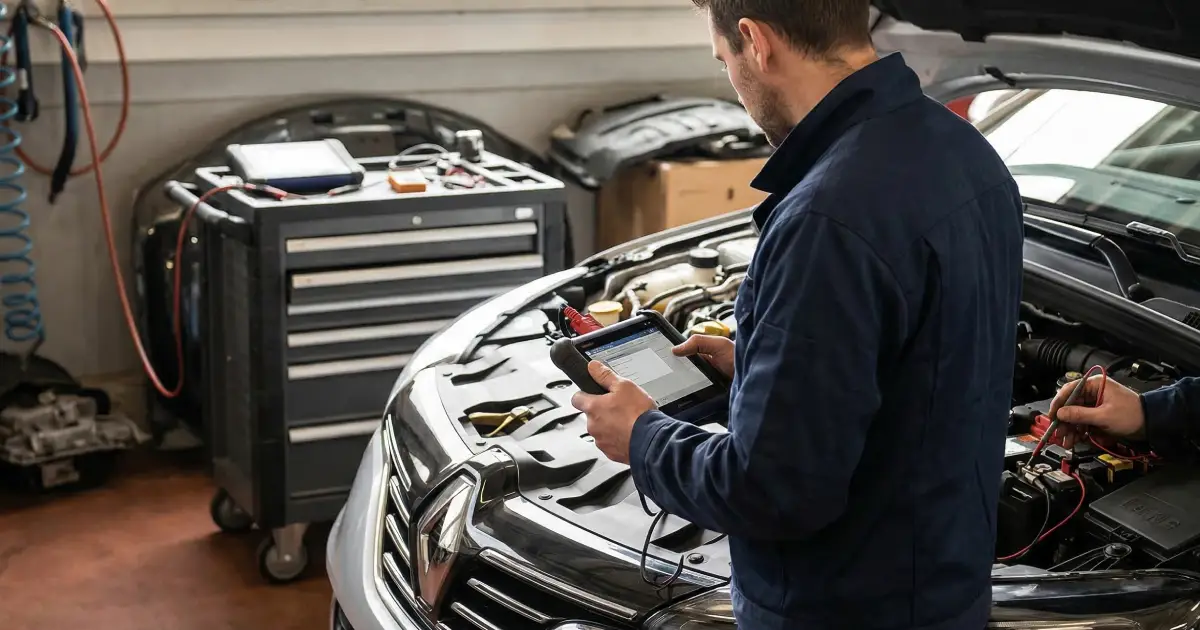
The symptoms you experience will vary depending on which control unit is reporting the DF005 code and the severity of the underlying fault. Here are the most common symptoms for each scenario:
Engine ECU DF005 (Crankshaft Position Sensor)
Engine cranks but will not start. This is the most alarming and most common symptom. The engine turns over normally when you twist the key or press the start button, but it refuses to fire. Without a reliable signal from the crankshaft position sensor, the ECU cannot determine the correct timing for fuel injection and ignition, so the engine simply will not run.
Intermittent stalling. In less severe cases, the engine may start and run for a while before suddenly cutting out. This often happens when the sensor connection is loose or the fault is heat-related — the sensor works when cold but fails as engine temperature rises.
Rough idle and misfires. A degraded crankshaft sensor signal can cause the engine to run unevenly at idle. You may feel vibrations through the steering wheel and seat, and the engine may sound like it is “hunting” for a stable speed.
Hesitation during acceleration. If the sensor signal is intermittent, you may notice the engine stumbling or hesitating when you press the accelerator, especially under load. This happens because the ECU is receiving inaccurate or missing timing data.
Check engine light illumination. The malfunction indicator lamp (MIL) will illuminate on the dashboard. In some Renault models, the light may appear immediately, while others require multiple drive cycles with the fault present before triggering the warning.
Loss of tachometer signal. Since the crankshaft position sensor provides the RPM data that drives the tachometer, a failed sensor may cause the rev counter needle to drop to zero or behave erratically, even while the engine is running.
Automatic Gearbox DF005 (Oil Pressure Sensor)
Transmission limp mode. The vehicle locks into a single gear (usually 3rd) and refuses to change gears normally. This is a protective measure to prevent damage to the transmission.
Harsh gear shifts. You may feel a noticeable “thud” or jolt during gear changes, indicating the transmission is not modulating hydraulic pressure correctly.
Transmission warning light. A dedicated transmission fault indicator may appear on the dashboard, separate from the check engine light.
Common Causes of the DF005 Code
Understanding the root cause is essential for a lasting repair. Here are the most frequently confirmed causes of the DF005 fault code, ranked by how often they are encountered in practice:
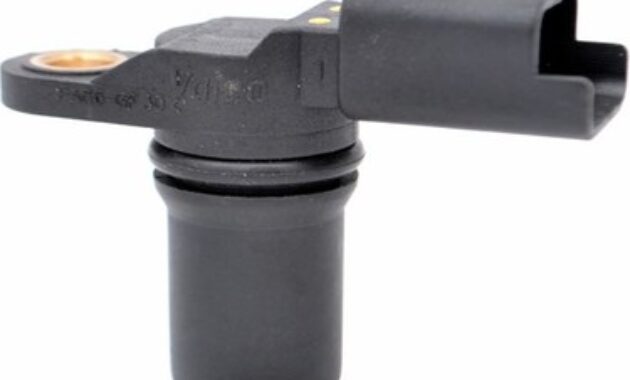
1. Faulty Crankshaft Position Sensor (TDC Sensor)
The sensor itself is the most common point of failure. Over time, the internal electronics degrade due to constant exposure to engine heat, vibration, and oil contamination. The magnetic pickup can weaken, or the internal circuitry can develop intermittent open circuits. Renault crankshaft sensors are known for having a finite lifespan, and they tend to fail between 80,000 and 150,000 kilometers.
2. Corroded or Damaged Connector
This is a well-documented and extremely common issue on Renault vehicles. The connector that attaches to the crankshaft position sensor (also called the TDC sensor) is prone to corrosion, heat damage, and poor contact. Renault has acknowledged this problem and released a modified connector kit. If your vehicle has the original black-colored sensor, you should upgrade to the newer modified blue connector version. The connection between the sensor and the wiring harness is often the real culprit, not the sensor itself.
3. Damaged or Frayed Wiring
The wiring harness that runs from the crankshaft sensor to the engine ECU passes through a hot, vibration-prone environment. Over years of use, the insulation can crack, chafe against metal components, or melt near exhaust manifolds. A broken wire or intermittent short circuit can produce the DF005 code even with a perfectly good sensor installed.
4. Worn Timing Belt or Chain
If the timing belt or chain has stretched beyond its service limit or skipped a tooth, the relationship between the crankshaft and camshaft positions becomes misaligned. This can cause the crankshaft sensor to report abnormal data, triggering the DF005 code. Renault recommends replacing the timing belt at manufacturer-specified intervals — neglecting this service is a common indirect cause of DF005.
5. Damaged Reluctor Ring (Signal Plate)
The reluctor ring, also called the tone ring or signal plate, is a toothed wheel mounted on the crankshaft. The crankshaft position sensor works by detecting the passing of these teeth as the crankshaft rotates. If teeth are broken, chipped, or if the ring has shifted position, the sensor cannot generate a clean signal pattern. This is a less common but important cause to rule out, especially on high-mileage vehicles.
6. Battery and Electrical Supply Issues
A weak battery, corroded battery terminals, or a failing alternator can cause voltage fluctuations that affect the crankshaft sensor’s ability to produce a reliable signal. Before replacing the sensor, always check that the battery is in good health and that the terminal connections are clean and tight.
7. ECU Software Error or Hardware Failure
In rare cases, the engine control unit itself may have a software glitch or internal hardware fault that prevents it from correctly processing the crankshaft sensor signal. This is the least common cause but should be considered if all physical components check out. An ECU reflash or, in worst cases, replacement may be needed.
Which Renault Models Are Affected?
The DF005 fault code can appear on virtually any Renault model that uses electronic engine management. However, certain models and engine types report this code more frequently due to the known TDC sensor connector issue. The most commonly affected vehicles include:
Renault Clio (Clio I, Clio II, Clio III) — particularly models with the 1.5 dCi (K9K) diesel engine. The Clio is one of the most frequently reported vehicles for DF005 on Renault owner forums.
Renault Megane (Megane I, Megane II) — both petrol and diesel variants are affected. The Megane II with the 1.5 dCi and 1.9 dCi engines is especially common.
Renault Scenic (Scenic I, Scenic II) — the 1.9 dCi variant is a frequent reporter of this code, as noted in multiple owner discussions.
Renault Kangoo — the commercial and passenger versions alike, primarily with diesel powertrains.
Renault Laguna (Laguna I, Laguna II) — both naturally aspirated and turbocharged diesel engines.
Renault Espace (Espace IV) — less common but documented, particularly on the 2.0 dCi engine.
Renault Trafic — the van and commercial variants with 1.9 and 2.0 dCi engines.
Renault Logan — especially prevalent in markets where the Logan is widely used as a daily driver.
Renault Modus and Vel Satis — less common but confirmed cases exist with diesel variants.
The engines most associated with DF005 are the K9K (1.5 dCi), F9Q (1.9 dTi/dCi), G9T (2.2 dCi), and M9R (2.0 dCi) diesel units. Petrol engines with the code often have the F4R or K4M designations.
Step-by-Step Diagnosis
Proper diagnosis is the key to avoiding unnecessary part replacements. Follow this structured approach to identify the exact cause of your DF005 code:
Step 1: Read and Record All Fault Codes
Connect an OBD-II scanner or, ideally, a Renault CLIP diagnostic tool. Read fault codes from all control units, not just the engine ECU. Record every code, noting which module reported it. Pay particular attention to whether DF005 appears alongside related codes like DF023 (Flywheel Signal Sensor Circuit), DF120 (Engine Speed Sensor Signal), or DF213 (Flywheel Signal Information Coherence). The presence of multiple related codes can help narrow down the cause.
Step 2: Clear Codes and Test Drive
Clear all stored fault codes from the system. Start the engine and take the vehicle for a 15-minute drive to allow the engine to reach normal operating temperature. After the test drive, scan again. If the DF005 code returns immediately, you have an active, ongoing fault that needs immediate attention. If the code stays cleared, the issue may be intermittent.
Step 3: Visual Inspection of the Crankshaft Position Sensor
Locate the crankshaft position sensor. On most Renault diesel engines, it is mounted on the engine block or bellhousing near the flywheel/flexplate. On some petrol engines, it sits near the crankshaft pulley at the front of the engine. Inspect the sensor body for cracks, oil contamination, or heat damage. Critically, examine the electrical connector — look for corrosion on the pins, melting or discoloration of the plastic housing, and broken locking tabs.
Step 4: Check the Wiring Harness
Trace the wiring from the sensor connector back toward the ECU. Look for chafed insulation, broken wires, or areas where the harness contacts hot surfaces like the exhaust manifold. Gently wiggle the connector and wiring while someone monitors the scanner for RPM signal — if the signal cuts in and out, you have a wiring or connector fault.
Step 5: Test Sensor Voltage and Resistance
With the ignition on (engine off), use a multimeter to verify that the sensor is receiving the correct reference voltage from the ECU — this is typically 5 volts. Then disconnect the sensor and measure its resistance across the signal pins. Compare your reading to the manufacturer’s specification in the service manual. An out-of-range reading confirms a failed sensor.
Step 6: Check the RPM Signal With a Scanner
Connect your scan tool and monitor live data while cranking the engine. The scanner should display an RPM reading. If the RPM reads zero during cranking, the ECU is not receiving a signal from the crankshaft sensor. This confirms a fault in the sensor, wiring, or connector.
Step 7: Inspect the Reluctor Ring and Timing Components
If accessible, visually inspect the reluctor ring (tone ring) for damaged or missing teeth. Also assess the condition of the timing belt or chain. If the belt is near its service interval or shows signs of wear, replace it before concluding the diagnosis.
Step 8: Check Battery Health
Measure battery voltage (should be 12.4V or higher at rest, 13.5–14.5V with the engine running). Inspect the terminals for corrosion and ensure they are tight. A weak electrical supply can produce false sensor fault codes.
How to Fix the DF005 Fault Code
Based on your diagnostic findings, here are the most effective repair procedures:
Replace the Crankshaft Position Sensor and Connector
This is the most common and effective fix. When replacing the sensor on a Renault, always use the modified version with the updated connector. If your current sensor has a black-colored connector, upgrade to the newer blue connector variant. Renault released modification kits for specific models — ask your parts supplier for the correct kit number for your vehicle.
The replacement procedure is straightforward on most models. Disconnect the battery, unplug the sensor connector, remove the retaining bolt (usually a single 10mm bolt), pull the old sensor out, insert the new sensor (lightly lubricate the O-ring), torque the bolt to specification, reconnect the connector, and reconnect the battery. Clear fault codes and test drive the vehicle.
Repair or Replace Damaged Wiring
If the wiring harness shows damage, repair the affected section using automotive-grade solder and heat-shrink tubing. For extensive damage, replace the relevant section of the harness. Ensure all repaired connections are properly insulated and routed away from heat sources.
Replace the Timing Belt or Chain
If the timing belt is worn, stretched, or past its replacement interval, have it replaced along with the tensioners and idler pulleys. This is a critical maintenance item — a failed timing belt on an interference engine can cause catastrophic internal damage costing thousands to repair.
Address Automatic Gearbox DF005
If the DF005 code is coming from the automatic gearbox ECU (oil pressure sensor circuit on DP0/AL4 transmissions), the repair involves checking the oil level and condition first, then inspecting the oil pressure sensor wiring and connector. If the sensor itself is faulty, replace it. In some cases, the pressure modulating solenoid valve and converter lock-up solenoid may also need attention, particularly if DF005 appears alongside DF018 (Torque Converter Not Locking Up).
ECU Reprogramming or Replacement
If all physical components are confirmed good, have the ECU software updated to the latest calibration using a Renault CLIP tool. In rare cases of internal ECU failure, the unit must be replaced and coded to the vehicle.
Replacement Cost Breakdown
Understanding the typical costs involved helps you budget appropriately and avoid overpaying:
Crankshaft Position Sensor (part only): $15 to $200. Aftermarket sensors are available at the lower end, while genuine Renault OEM sensors typically cost between $50 and $120. Common OEM part numbers for Renault crankshaft sensors include 7700101969, 8200436025, 8200396919, and 8200643171 — always verify the correct part number for your specific model and engine.
Labor for sensor replacement: $50 to $150. The job usually takes between 30 minutes and 1 hour. On most Renault models, the sensor is reasonably accessible, keeping labor costs manageable. However, on some engine configurations where the sensor is positioned behind other components, additional disassembly time can increase the cost.
Total repair cost (sensor replacement): $100 to $300 for a standard crankshaft sensor replacement including parts and labor.
Timing belt replacement: $400 to $900, including the belt, tensioners, water pump (typically replaced at the same time), and labor. This is a more involved job but is essential preventative maintenance.
ECU repair or replacement: $300 to $1,000+, depending on whether the unit can be repaired by a specialist or needs full replacement. ECU failure is rare and should only be suspected after all other causes are eliminated.
Related Fault Codes
The DF005 code often appears alongside other diagnostic trouble codes that can help pinpoint the exact nature of the problem. Understanding these related codes provides valuable diagnostic context:
P0335 — Crankshaft Position Sensor A Circuit Malfunction. This is the universal OBD-II equivalent of DF005 when read from the engine ECU.
DF023 (P0335) — Flywheel Signal Sensor Circuit. This code relates to the flywheel speed sensor, which works in conjunction with the crankshaft position sensor. If both DF005 and DF023 appear together, the shared wiring or connector is the most likely cause.
DF088 (P0773) — Sequence Solenoid Valve Circuit “EVS5”. When this appears with DF005, it can indicate a broader electrical issue affecting multiple engine management circuits.
DF120 — Engine Speed Sensor Signal. This code specifically addresses the quality of the signal being received, rather than the circuit integrity. It often appears alongside DF005 when the sensor is producing a weak or erratic signal.
DF213 — Flywheel Signal Information Coherence. This code indicates that the ECU has detected inconsistent data from the flywheel/crankshaft sensor. It often points to a damaged reluctor ring or a severely worn timing component.
P0336 — Crankshaft Position Sensor A Circuit Range/Performance. This companion code to P0335/DF005 indicates the sensor is producing a signal, but it falls outside expected parameters.
How to Prevent DF005 From Returning
Taking proactive steps can significantly reduce the likelihood of encountering the DF005 fault code again:
Use the modified connector. If your vehicle still has the original-style crankshaft sensor connector, upgrade to the Renault-approved modified version during your next service. This single step eliminates the most common failure point.
Follow timing belt service intervals. Replace the timing belt (and associated components) at the manufacturer-recommended intervals. Do not stretch this service beyond the specified mileage or time limit. A well-maintained timing system ensures the crankshaft sensor receives clean, consistent signals.
Inspect wiring during routine services. Ask your mechanic to visually check the crankshaft sensor wiring and connector during each major service. Early detection of worn insulation or corroded connectors prevents roadside breakdowns.
Maintain battery health. Replace your battery every 4 to 5 years, keep terminals clean, and ensure the charging system is functioning properly. A stable electrical supply is essential for all engine sensors to operate reliably.
Address oil leaks promptly. Oil contamination is a common cause of sensor and connector degradation. If you notice oil leaks near the crankshaft sensor area, fix the source before it damages the sensor.
Use quality replacement parts. When replacing the crankshaft sensor, choose OEM or high-quality aftermarket parts that meet or exceed original specifications. Budget sensors may fail prematurely, leading to a repeat of the same problem.
Frequently Asked Questions
What does the DF005 fault code mean on a Renault?
The DF005 fault code most commonly indicates a problem with the engine speed sensor (crankshaft position sensor) circuit when read from the engine ECU, corresponding to the universal OBD-II code P0335. However, the exact meaning varies depending on which control unit reports it — it can also refer to the oil pressure sensor circuit (automatic gearbox), a key card error (UCH module), or a parking sensor fault.
Can I drive my Renault with a DF005 fault code?
Driving with a DF005 code related to the crankshaft position sensor is not recommended. The vehicle may stall unexpectedly at any speed, creating a significant safety hazard, and it could fail to restart, leaving you stranded. Have the issue diagnosed and repaired promptly.
How much does it cost to fix DF005 on a Renault?
The total repair cost typically ranges from $100 to $300 for a crankshaft position sensor replacement, including parts and labor. The sensor itself costs between $15 and $200 depending on whether you choose OEM or aftermarket. If a timing belt replacement is also needed, expect an additional $400 to $900.
Which Renault models are affected by the DF005 fault code?
The DF005 code can affect any Renault model with electronic engine management. It is most commonly reported on the Clio, Megane, Scenic, Kangoo, Laguna, Espace, Trafic, and Logan, particularly those equipped with K9K (1.5 dCi), F9Q (1.9 dCi), and M9R (2.0 dCi) diesel engines.
Is the DF005 fault code the same as P0335?
When read from the engine ECU, yes — DF005 corresponds to P0335 (Crankshaft Position Sensor A Circuit Malfunction). DF codes are Renault’s proprietary manufacturer codes that provide more detailed system-specific diagnostics. The key difference is that DF005 can have entirely different meanings when read from other control units like the automatic gearbox or the UCH body control module.
Conclusion
The DF005 Renault fault code is a common but well-understood issue that affects a wide range of Renault models. In the vast majority of cases, the cause is a faulty crankshaft position sensor or its connector — a problem that Renault has addressed with modified replacement parts. The critical first step is confirming which control unit is reporting the code, as DF005 can mean very different things depending on the source module.
Follow the diagnostic steps outlined in this guide to identify the root cause accurately, and prioritize using the updated sensor connector to prevent the issue from recurring. With the right parts and a methodical approach, this is a repair that most experienced DIY owners can tackle in under an hour, or a quick and affordable fix at any qualified workshop.
If your Renault is displaying the DF005 code and you are experiencing starting problems or stalling, do not delay the repair — address it promptly to avoid being stranded and to prevent potential secondary damage from running with incorrect engine timing.